
Snoring is one of those nighttime problems that seems simple but is actually influenced by many factors: anatomy, breathing patterns, sleep depth, allergies, weight, alcohol use, and—very importantly—sleep position. One of the most common questions people ask is whether sleeping on the right side helps or worsens snoring. The answer isn’t a simple yes or no, but science gives us some clear clues.
Why sleep position affects snoring
Snoring happens when airflow is partially blocked as you breathe during sleep. When muscles in the throat relax, the airway narrows. Air passing through causes the surrounding tissues to vibrate, producing the familiar snoring sound.
Your sleep position changes how gravity acts on these tissues. This is why sleeping on your back is strongly associated with louder and more frequent snoring: gravity pulls the tongue and soft palate backward, narrowing the airway. Side sleeping, in general, is usually better for keeping the airway more open.
But not all side sleeping is equal.
Sleeping on the right side: helpful or harmful?
For many people, sleeping on the right side can reduce snoring compared to sleeping on the back, but it may worsen snoring compared to sleeping on the left side—especially in certain individuals.
Here’s why:
1. Airway openness
Side sleeping prevents the tongue from falling straight back into the throat. This alone often decreases snoring intensity. From this perspective, the right side is usually better than sleeping on your back.
However, some studies and sleep specialists note that the left side may keep the airway slightly more stable for certain people, particularly those with sleep apnea or reflux-related snoring.
2. Acid reflux connection

Acid reflux is a major contributor to snoring. When stomach acid moves upward, it can irritate the throat and airway, causing inflammation and narrowing that worsen snoring.
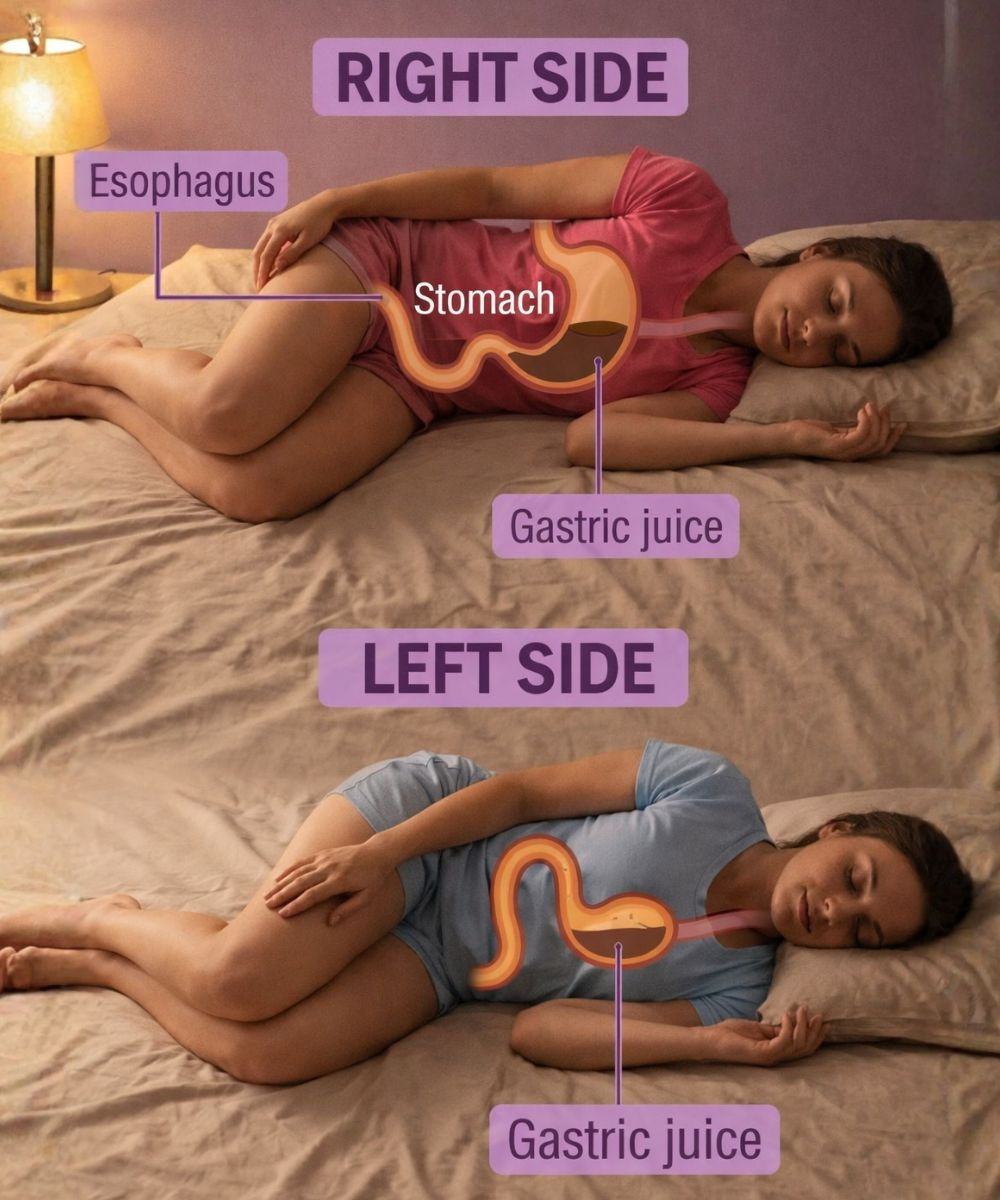
Sleeping on the right side can increase acid reflux, because of how the stomach and esophagus are positioned. Increased reflux can lead to more throat irritation overnight, which may make snoring worse—especially in people who already have GERD.
In contrast, sleeping on the left side has been shown to reduce reflux, which is why doctors often recommend it for people who snore due to acid reflux.
3. Nasal congestion and circulation
see next page to continue reading
To see the full instructions for this recipe, go to the next page or click the open button (>) and don't forget to share it with your friends on Facebook.