

And sure, some of those products work great. But they also:
Smell like a chemical plant
Cost way more than they should
Leave behind a residue that builds up over time
Meanwhile, there’s a simpler, cheaper, and kinder-to-your-nose method that works on tile, laminate, vinyl, and sealed wood floors. Not just “okay” clean—squeaky, almost-new-looking clean.
So, What Are the 3 Magic Ingredients?
Drumroll please…
White vinegar
Baking soda
Dish soap
That’s it. Seriously.
This trio works together like the dream team:
Vinegar breaks down grime, dissolves mineral deposits, and naturally disinfects.
Baking soda gently lifts stains and neutralizes odors without scratching your floor.
Dish soap cuts through grease and helps suspend dirt so you’re not just smearing it around.
Combined, they do what fancy store-bought cleaners promise—but without the hefty price tag or synthetic scents that cling to your socks for hours.
How to Use Them: The Step-by-Step Floor-Cleaning Ritual
Don’t worry—this isn’t some complicated TikTok hack that takes an hour and a half and 12 microfiber cloths. It’s quick, it’s easy, and it works like a charm.
You’ll Need:
Bucket or basin
Mop or microfiber cloth
1/2 cup white vinegar
1 tablespoon baking soda
A few drops of dish soap (any brand, unscented is best)
Warm water
The Method:
Fill your bucket with about a gallon of warm water.
Add the vinegar and dish soap, stirring gently.
Add baking soda Slowly — it’ll fizz (yay science), so give it a moment.
Mop as usual, working in sections.
For extra grime, sprinkle baking soda directly on trouble spots, then mop over with your mixture.
Rinse with clean water or go over it once more with a damp mop if you’re worried about residue.
Let it air dry—or towel dry for that satisfying squeaky-clean finish.
And just like that, your floor goes from “meh” to miraculous.
Real Talk: Will It Make My Floor White Again?
Yes—if it was ever white to begin with.
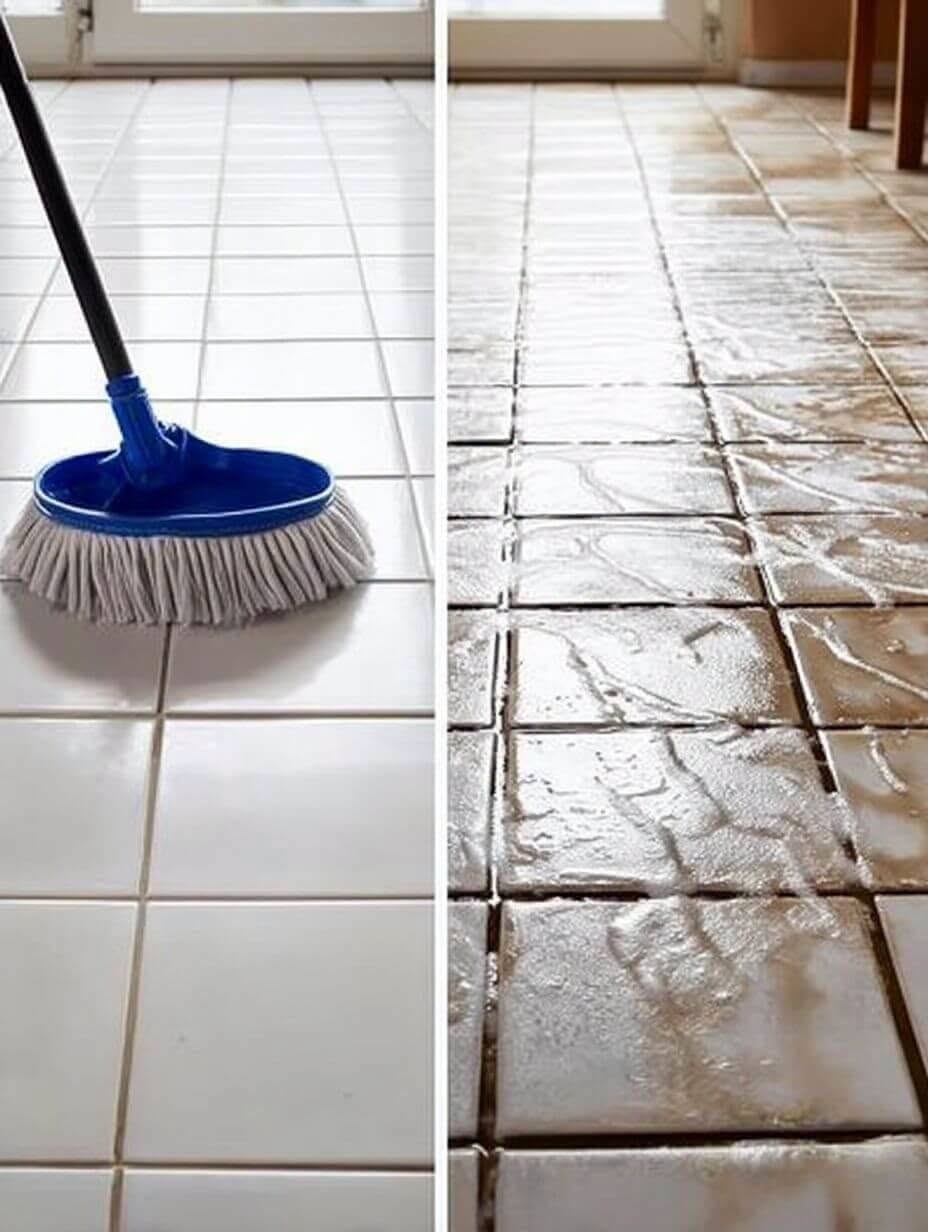
This isn’t bleach. It won’t repaint your floor. But it will strip away the invisible layer of grime, food residue, pet pawprints, sticky juice spots, and whatever that weird footprint in the hallway was. What’s underneath all that buildup is often much brighter than you remember.
People who’ve tried this swear their floor looked like new again. Especially in kitchens, entryways, or bathroom tile—the areas that take the most abuse.
Bonus: It Works on Grout Too (Sort Of)
If your floor has light-colored grout lines, this mixture can give them a noticeable refresh. For stubborn grime, though, try this trick:
Sprinkle baking soda directly into the grout lines.
Spray with vinegar.
Let it fizz for a few minutes.
Scrub lightly with a toothbrush.
Mop clean.
You might cry a little when you see the difference. No judgment.
What About Wood Floors?
Good question—and here’s where we get a little picky.
Do not use vinegar on unsealed hardwood. It’s acidic, and over time, it can damage the finish. But if your wood floor is sealed (as most are), you’re good—as long as you dilute properly.
Just skip the baking soda and use this gentler mix:
NEXT