
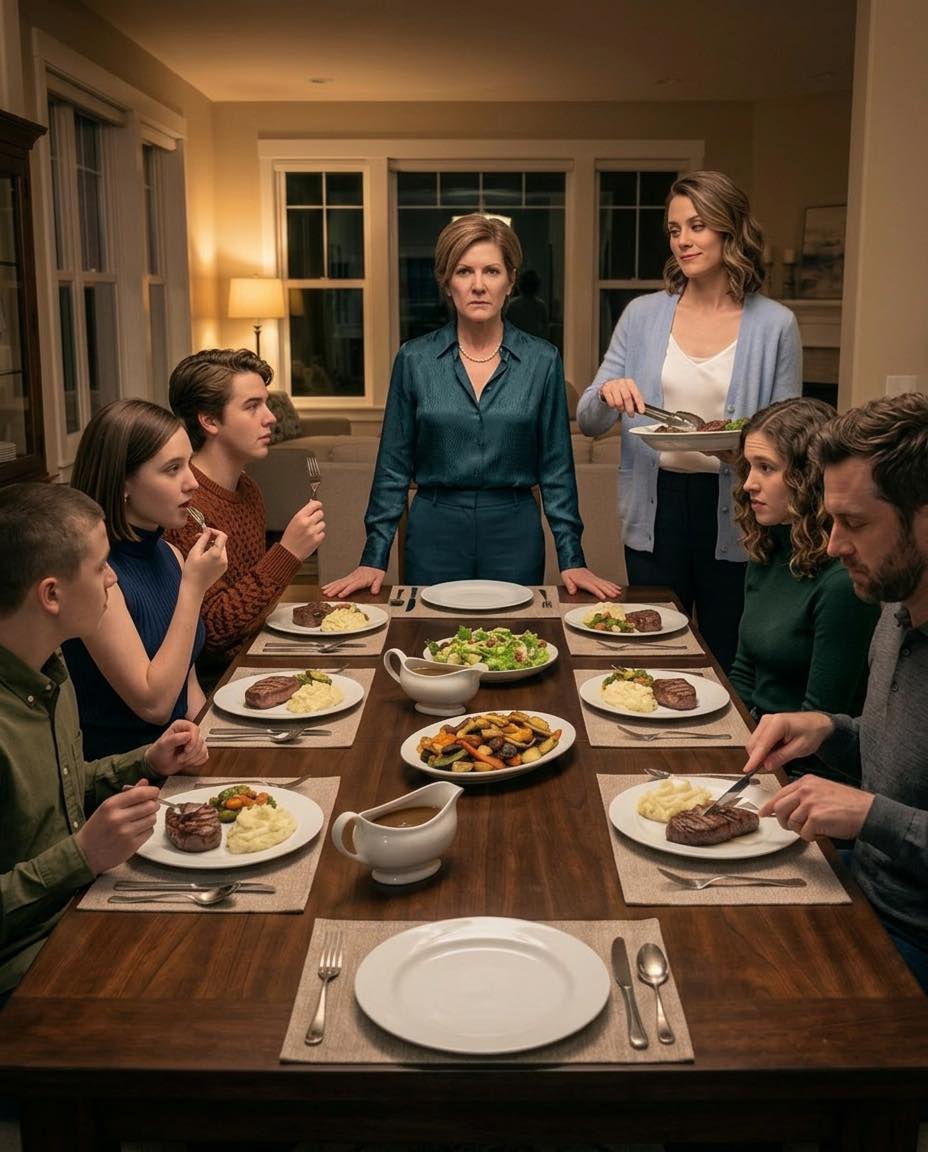
In that letter, I had written about the small cuts: how Kendra would “forget” to include my name on holiday group texts, how dinner times mysteriously changed so I would arrive late, how she joked about my “old-fashioned” habits while Matthew laughed too loudly. I had written about how painful it felt to watch my son slowly become a stranger in his own life.
Matthew let out a long breath. “I didn’t realize how much I ignored.”
“That’s how it happens,” I said gently. “It starts small, and one day your mother is sitting at a table without a plate while everyone acts like it’s normal.”
He stayed quiet for a long time. Then, with a steadiness I hadn’t heard from him in years, he said, “I told Kendra we’re leaving.”
I blinked. “You what?”
“We’re leaving,” he repeated, louder now, like he needed to hear himself say it. “I’m not finishing dinner. I told her that if she can’t respect you, then I’m not celebrating with her like nothing happened.”
My heart thumped—not from victory, just from surprise. “What did she say?”
“She said you were controlling me,” he answered. “She said you’re ‘always the victim.’”
“And what did you say?” I asked quietly.
“I said,” Matthew paused, his voice trembling with anger, “that I watched my mother sit there hungry while my wife acted like she wasn’t family. And I pretended it was fine. I’m not doing that again.”
The streetlights blurred slightly in front of me. I blinked hard.
“Mom,” he added gently, “I’m sorry.”
I pulled into a quiet parking lot and stopped the car because my hands were shaking again.
“I don’t need perfection,” I told him. “I need effort. I need you to show up.”
“I will,” he said. “And… could you meet me tomorrow? Just the two of us. No Kendra. I want to talk. Really talk.”
I swallowed, the old instinct to protect him clashing with the new instinct to protect myself.
“Yes,” I said finally. “Tomorrow.”
After we hung up, Tom looked at me carefully. “He’s coming around,” he said.
“Maybe,” I replied. “Or maybe tonight was just the first crack.”
The next day Matthew met me at a small diner I had loved for years—nothing fancy, just good coffee and the comforting feeling of familiarity. He looked exhausted when he walked in, his eyes red-rimmed, but when he hugged me, it felt genuine.
“I didn’t know how to be a husband without disappearing,” he confessed, staring down at his hands. “Kendra has a way of making it feel like peace is worth any cost.”
“And you were paying that cost with me,” I said gently.
He nodded, shame evident on his face. “I was.”
He didn’t promise instant transformation. He didn’t turn Kendra into the villain. He simply admitted what he’d done—and what he intended to do differently.
That was enough for a beginning.
A few weeks later, Kendra invited us to dinner again. This time she didn’t order for everyone. She asked. She listened. She didn’t suddenly adore me, but she stopped treating me like a problem that needed managing.
And Matthew—my son—stopped looking down.
The thing no one expected me to say that night wasn’t a threat.
It was a boundary.
And it turned out boundaries were the first real invitation I had received in a very long time.
To see the full instructions for this recipe, go to the next page or click the open button (>) and don't forget to share it with your friends on Facebook.