
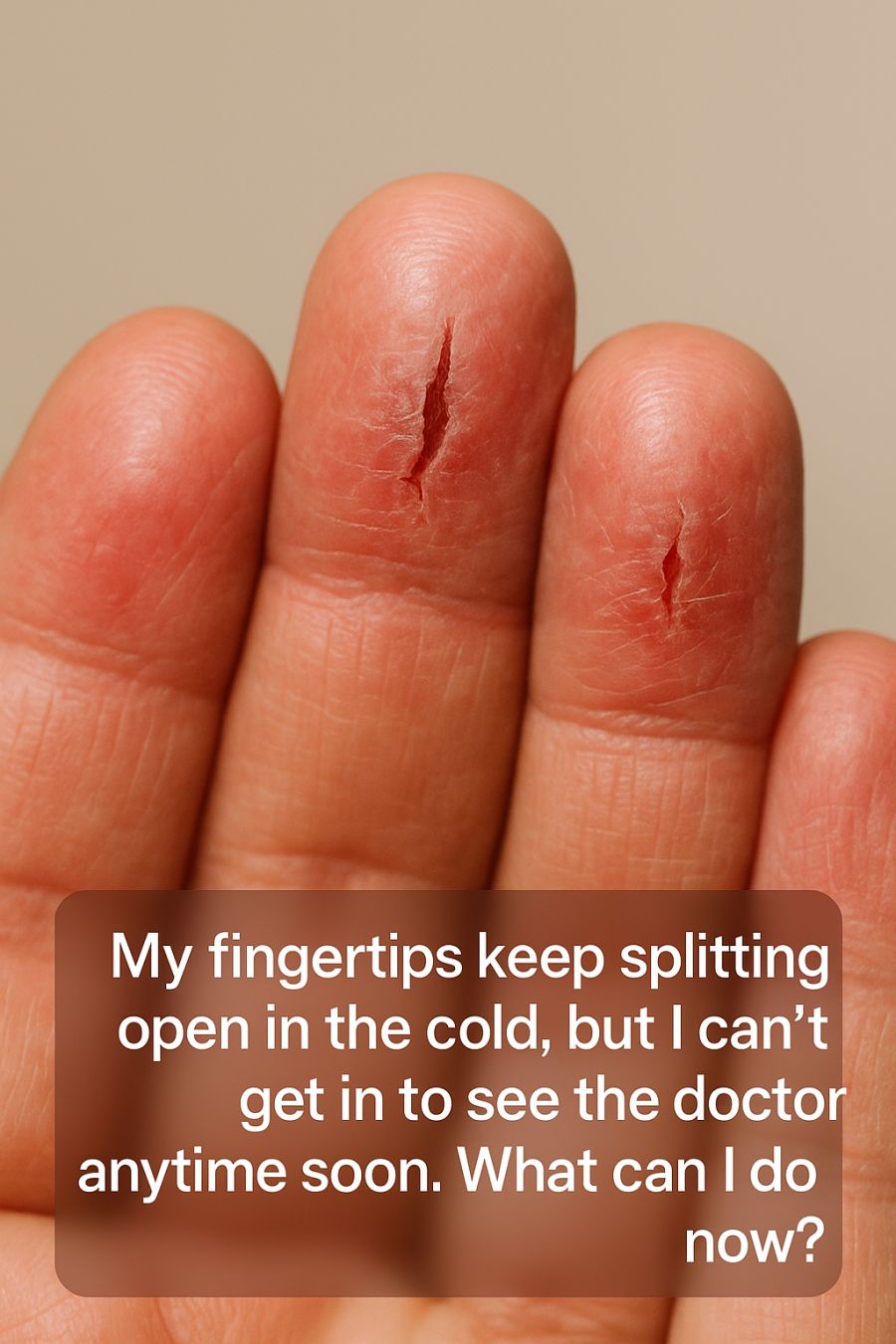
My fingertips keep splitting open in the cold, but I can’t get in to see the doctor anytime soon. What can I do now?
In some cases, applying a small amount of medical-grade superglue to the edges of the cracks can help hold the skin together and promote healing. This method should be used cautiously and only on clean, dry skin.
To use this hack safely, apply a tiny amount of superglue onto a toothpick and gently spread it along the edges of the crack. Hold the skin together for a few seconds until the glue dries. Avoid using this method on deep or infected cuts, as it can trap bacteria inside.
5. Bandage Like a Pro: Using Liquid Bandages, Tapes, and Dressings
Liquid bandages are an excellent option for sealing small cracks and preventing further irritation. They form a flexible, waterproof layer over the skin, allowing it to heal while shielding it from external irritants.
For larger cracks, consider using a soft adhesive bandage or medical tape. Ensure the bandage is snug but not too tight, as this can restrict circulation. Change the dressing regularly, especially if it becomes wet or soiled.
6. Build a Moisture Sandwich: Layering Ointments and Creams That Work
To keep your skin well-hydrated, use the “moisture sandwich” method. Begin by applying a humectant, such as a glycerin-based lotion, to draw moisture into the skin. Follow with a thick emollient cream to replenish the skin’s natural barrier.
Finally, seal everything in with an occlusive, such as petroleum jelly or a thick balm, to lock in moisture. This layering technique ensures that your skin remains hydrated and less prone to splitting.
7. Nighttime Repair Routine: Cotton Gloves, Occlusives, and Soaks
A nighttime repair routine can significantly improve the condition of your skin. Start by soaking your hands in warm water for 5-10 minutes to soften the skin. After drying them gently, apply a thick layer of an occlusive moisturizer.
To enhance the absorption of the moisturizer, wear cotton gloves overnight. This will create a warm, moist environment that promotes healing. In the morning, your hands should feel softer and more nourished.
8. Protect Your Hands From Water, Soap, and Sanitizer Overload
Frequent exposure to water, soap, and sanitizers can exacerbate the drying effects on your skin. To minimize this, opt for a gentle, moisturizing hand soap and try to limit the use of hand sanitizers to when soap and water are unavailable.
When washing your hands, use lukewarm water instead of hot, as hot water can strip the skin of its natural oils. After washing, apply a moisturizer immediately to replenish lost moisture.
9. Glove Strategy: What to Wear Indoors, Outdoors, and While Cleaning
See continuation on next page
