
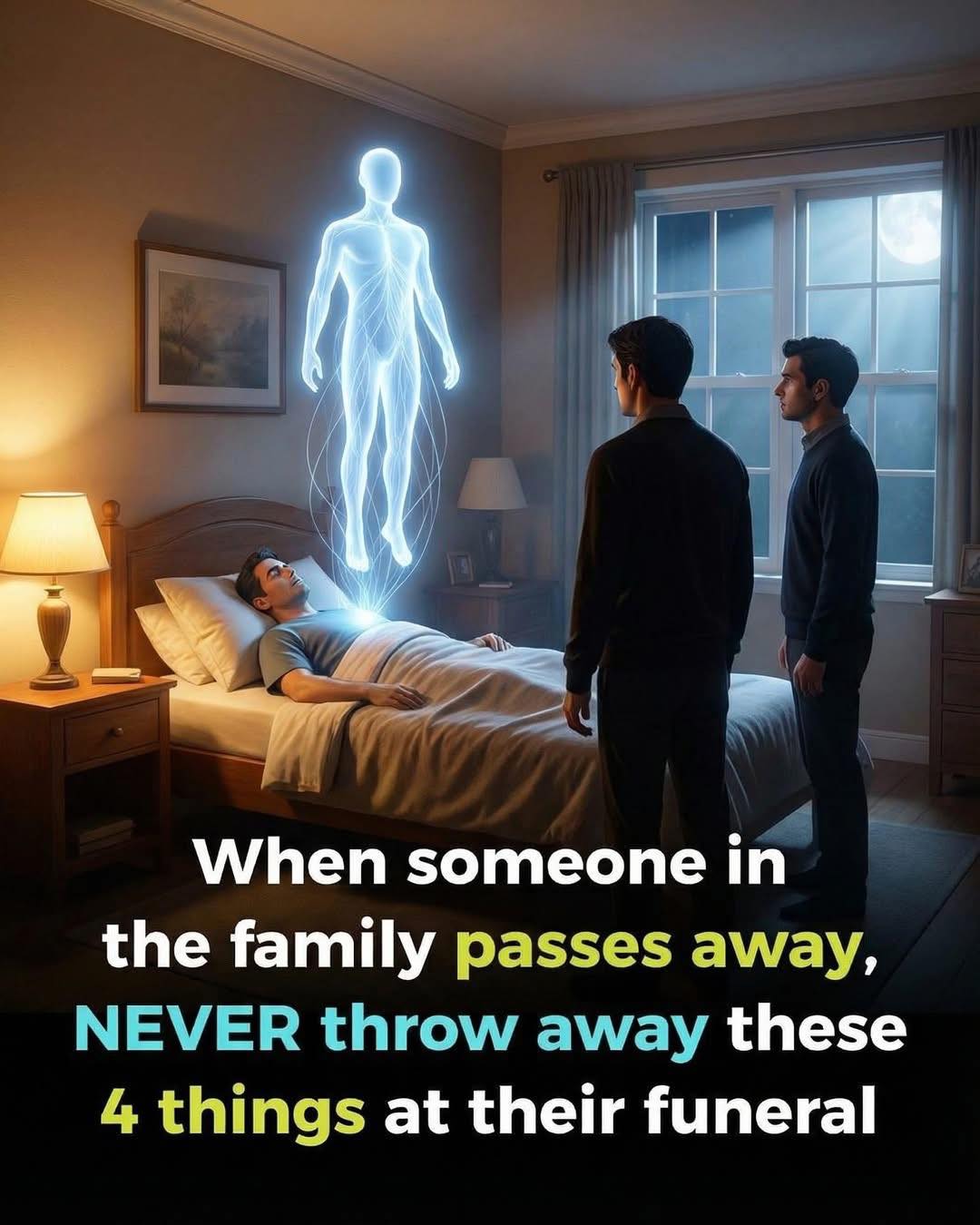
1) Money (coins, bills, large sums)
This is one of the most widespread superstitions. In some ancient cultures, it was believed that the deceased had to “pay” for a step or a journey.
But the Christian faith doesn’t teach that: no one can buy the soul’s rest, much less “with cash.”
Furthermore, money symbolizes attachment to earthly things. Placing it is like telling the soul:
“Remember material things,” when it precisely needs to be freed from them.
2) Jewelry, rings, chains, and valuables
Many want their loved one to “look good” or to depart with what they loved. But gold is useless to the soul, and for the living, it can become a false notion: that the value of farewell lies in objects.
There’s an even more delicate point: if the person had a strong attachment to their belongings, reminding them of this in their final moments can become a final emotional burden.
3) Personal objects that represent attachments
Keys, glasses, diaries, letters, saved photos, watches, cell phones… even today, some people place phones or tablets.
Each object speaks volumes. For example:
Keys: “It’s still your home”
Planner: “You still have unfinished business”
Cell phone: “You’re still connected to things here”
A Christian farewell seeks the opposite: surrender, let go, trust.
4) Food and drink (bread, sweets, alcohol)
This is another gesture born from ancient beliefs: that “there” one is hungry or thirsty just like here.
But the soul is not nourished by food. It is sustained, through faith, prayer, God’s mercy, and love expressed in good works.
The most serious thing is when alcohol is given to someone who has struggled with addiction. It’s like leaving them a reminder of their wound at the moment when they most need release.
5) Photos of living people
This is extremely important. Photos of children, grandchildren, partners, or living relatives should not be included.
Beyond popular opinion, the main problem is spiritual: the photo is used as an “emotional amulet,” as a “magical” gesture to elicit something (“that it protects him/her,” “that he/she doesn’t forget me,” “that he/she watches over me”).
And faith is not based on magic or symbolic shortcuts, but on prayer and trust.
6) Objects linked to vices or sins:
Gambling cards, cigarettes, drinks, “lucky charms,” things associated with destructive habits.
This is not comforting. It is a reminder.
And if the person has carried these struggles, the last thing they need is to carry symbols of them as if they were part of their eternal identity.
7) Sacred icons or images from the home (especially antique ones):
see next page to continue reading
To see the full instructions for this recipe, go to the next page or click the open button (>) and don't forget to share it with your friends on Facebook.