
San Sebastián Cheesecake: The Cheesecake That Conquered the World.
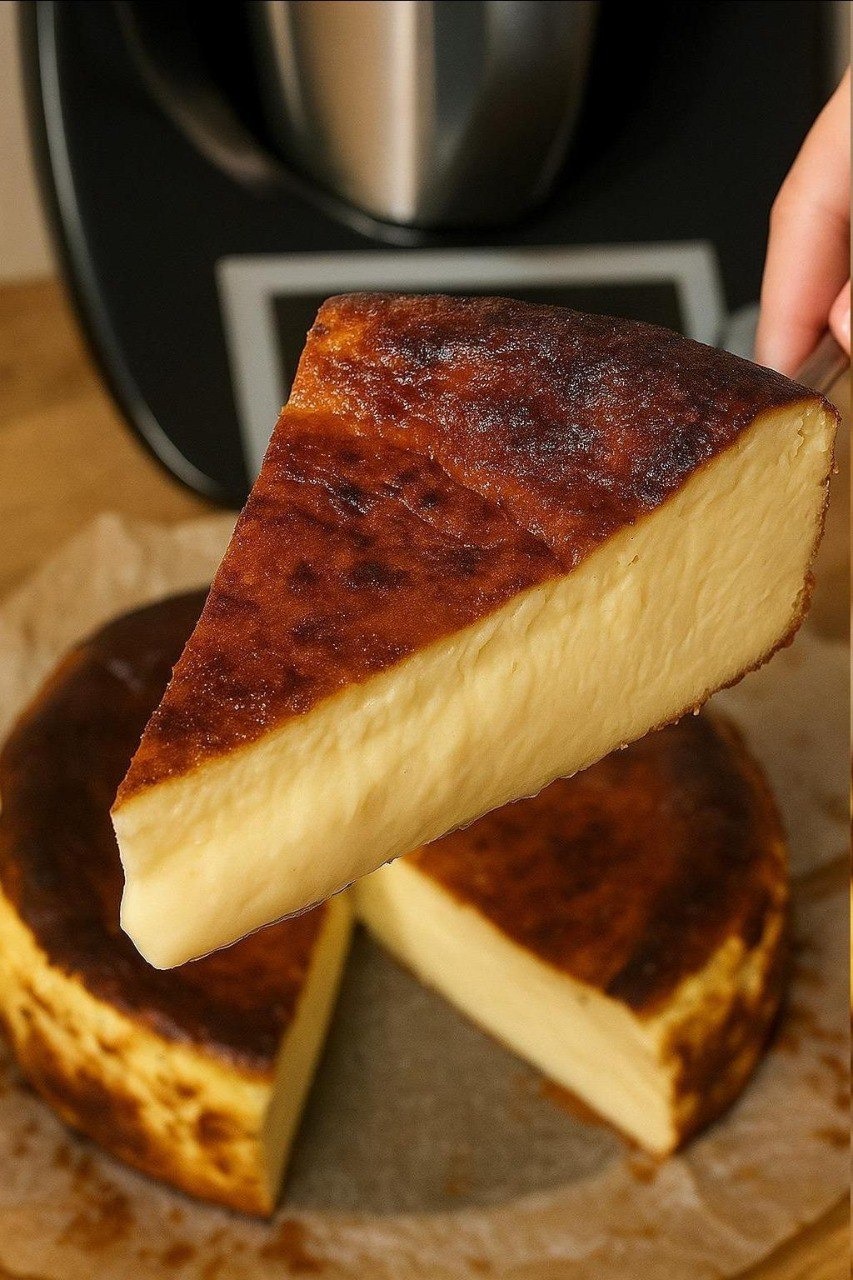
The San Sebastián Cheesecake, also known as “Burnt Basque Cheesecake,” is a cheesecake originating from the Basque Country that has revolutionized the world of pastry. Its rustic appearance, creamy texture, and rich flavor have made this dessert a favorite in both fine dining restaurants and homes around the world.
Unlike the classic American cheesecake, this Basque version has no biscuit base and is baked at a high temperature so that its surface becomes burnt and caramelized, creating a perfect contrast with its soft and silky interior.
Origin of the San Sebastián Cheesecake:
The recipe was created in 1990 at the La Viña restaurant in San Sebastián, Spain, by chef Santiago Rivera. His goal was to prepare a simple, uncomplicated dessert, but one full of flavor. The result was a unique cheesecake, with a more intense flavor, no topping, and a melt-in-the-mouth texture.
Over time, its fame crossed borders, becoming a global phenomenon that reached the best cafes and restaurants in the world, from New York to Tokyo.
Key Characteristics of San Sebastián Cheesecake:
No crust: It doesn't have a cookie or pastry base, just the filling.
Charred exterior: Its dark surface is part of its identity.
Creamy interior: When cut, it should have an almost flan or mousse-like texture.
Few ingredients: Its magic lies in its simplicity.
Basic Ingredients:
The traditional recipe uses only a few ingredients:
Cream cheese (like Philadelphia)
Sugar
Eggs
Heavy cream Flour
(very little, or even none in some versions)
How is the "Brunt" Effect Achieved?
Continued on page 2
To see the full instructions for this recipe, go to the next page or click the open button (>) and don't forget to share it with your friends on Facebook.