

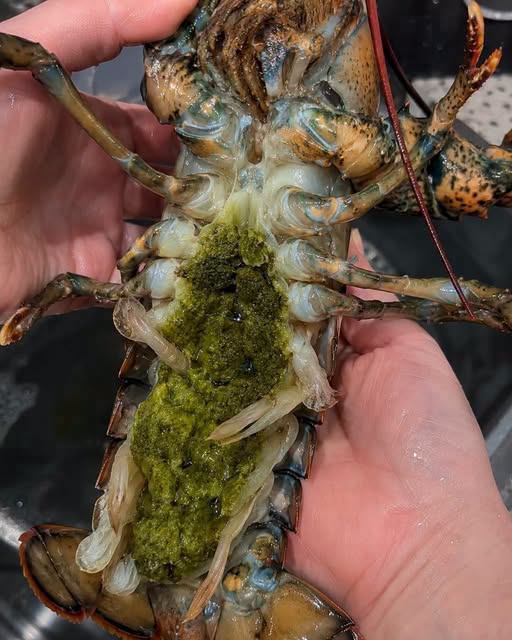
How Can You Tell If Tomalley Is Fresh?
Fresh tomalley typically appears:
Green to olive green in color
Smooth and creamy
Moist but not watery
Mildly ocean-scented
If it develops a strong sour odor, unusual discoloration, or signs of spoilage, it’s best to discard the entire lobster.
Freshness matters just as much as understanding what you’re eating.
Purchasing lobster from trusted seafood markets and reputable suppliers greatly reduces the risk of foodborne illness.
Does Cooking Remove the Risk?
This is a common misconception.
Cooking destroys many bacteria and parasites, but it does not eliminate marine toxins or heavy metals that may be present in tomalley.
Whether the lobster is boiled, steamed, grilled, or baked, those substances can remain.
That’s why food safety recommendations focus on moderation rather than cooking method.
The decision ultimately comes down to personal preference, individual health considerations, and confidence in the seafood’s source.
The Best Way to Enjoy Lobster Safely
If you’re preparing lobster at home or ordering it at a restaurant, a few simple guidelines can help you enjoy it with confidence.
Choose Lobster from Trusted Sources
Where your seafood comes from matters.
Buy lobster from reputable seafood markets, grocery stores, or restaurants that follow proper food safety practices. Commercial suppliers are generally monitored more closely for water quality and harvesting regulations than unknown or recreational sources.
Fresh lobster should have:
A clean ocean smell
Firm, translucent meat before cooking
No sour or ammonia-like odor
A hard shell with no obvious damage
If you’re harvesting lobster yourself, always check local advisories regarding water quality and harmful algal blooms before consuming any part of the animal.
Should You Eat the Green Stuff?
There’s no universal answer.
Some seafood enthusiasts consider tomalley a prized delicacy with an intense, buttery seafood flavor. Others avoid it entirely because of food safety recommendations.
Both choices are perfectly reasonable.
If you decide to eat it:
Enjoy it only occasionally.
Eat small amounts.
Make sure the lobster comes from clean, regulated waters.
If you’d rather skip it, you’re not missing the primary edible portion of the lobster. The tail, claws, knuckles, and legs provide the sweet, tender meat that makes lobster famous around the world.
Common Myths About Lobster Tomalley
Myth: Green means the lobster is spoiled.
Fact: Healthy tomalley is naturally green because of pigments in the lobster’s digestive system.
See also Fried Mushrooms with Homemade Ranch That Are Crispy and Irresistible
Myth: It’s lobster poop.
Fact: No. Tomalley is an internal organ that functions like a liver and pancreas. Waste is expelled separately.
Myth: Cooking makes it completely safe.
Fact: Cooking destroys harmful microbes but does not remove naturally occurring marine toxins or environmental contaminants.
Myth: Everyone should avoid it.
Fact: Many people eat tomalley without issue. Health authorities simply recommend moderation, especially for vulnerable groups or when seafood comes from uncertain sources.
Frequently Asked Questions
Is the green stuff poisonous?
Not inherently. However, because it can accumulate marine toxins and environmental contaminants, health agencies often recommend limiting consumption.
Can children eat it?
Many experts advise serving children only the white lobster meat rather than the tomalley.
Is tomalley nutritious?
It contains fats, vitamins, and minerals, but those nutritional benefits should be weighed against the possibility of concentrated contaminants.
Does every lobster have green tomalley?
Yes. Every lobster has this digestive organ, although the amount and appearance may vary depending on the lobster’s diet and condition.
Why do chefs sometimes use it in recipes?
Its rich, concentrated seafood flavor can enhance sauces, soups, bisques, and spreads, making it popular in some traditional cuisines.
Final Thoughts
The mysterious green substance inside a lobster has sparked curiosity for generations. While it may look unusual, it isn’t a sign that your lobster has gone bad. It’s simply the lobster’s tomalley—an organ that plays an important role in digestion.
For some diners, it’s a sought-after delicacy prized for its bold, ocean-rich flavor. For others, it’s something to leave on the plate because of recommendations to limit exposure to naturally occurring marine toxins and environmental contaminants.
The good news is that you don’t have to choose one side or the other. Understanding what tomalley is allows you to make an informed decision based on your own comfort level, your health, and where the lobster came from.
Whether you savor every part of the lobster or stick to the sweet white meat, knowledge is the best ingredient at the table.
The next time you crack open a lobster and spot that bright green surprise, you won’t have to wonder what it is—you’ll know exactly why it’s there and how to decide whether it’s right for you.