

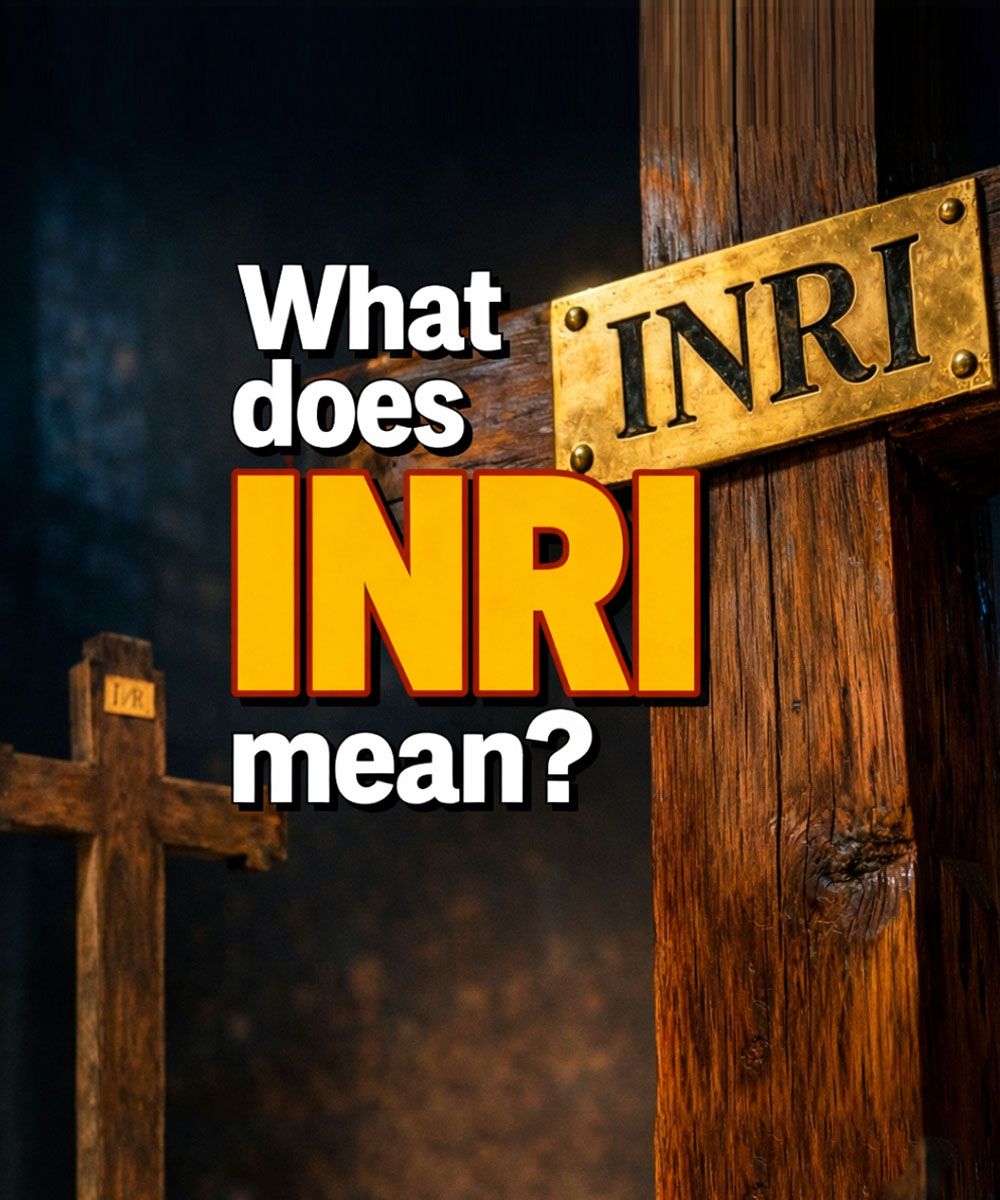
The letters INRI come from the Latin phrase:
Iesus Nazarenus Rex Iudaeorum
Which translates as:
Jesus of Nazareth, King of the Jews
This was not a tribute. For the Romans, calling oneself “king” without the Empire’s authorization was an act of political rebellion. In that context, this title was the official reason for his condemnation.
The conflict with religious leaders
Jewish religious leaders were uncomfortable with this inscription. They didn’t want it to appear that Rome recognized Jesus as king. Therefore, they asked Pilate to change the text to:
“This man said, ‘I am the King of the Jews.’”
But Pilate refused and responded with a phrase that has gone down in history:
“What I have written, I have written.”
The sign remained as it was.
Interpretations that emerged over time
Over the centuries, many people began to search for hidden meanings in INRI. In mystical and alchemical traditions, an alternative phrase appeared:
“Igne Natura Renovatur Integra” (Nature is completely renewed by fire)
Although it sounds profound, it has no historical or biblical connection to the inscription on the cross. It is a later symbolic reinterpretation, not the actual meaning.
Historically, INRI is simply the Latin abbreviation for the reason for execution.
What INRI Represents Today
Although it began as a political indictment, over time INRI transformed into a powerful spiritual symbol.
For millions of believers, it represents:
The identity of Jesus
His sacrifice
The confrontation between human power and spiritual truth
The union of history, faith, and destiny
A simple Roman sign ended up becoming one of the most recognized symbols of Christianity.