

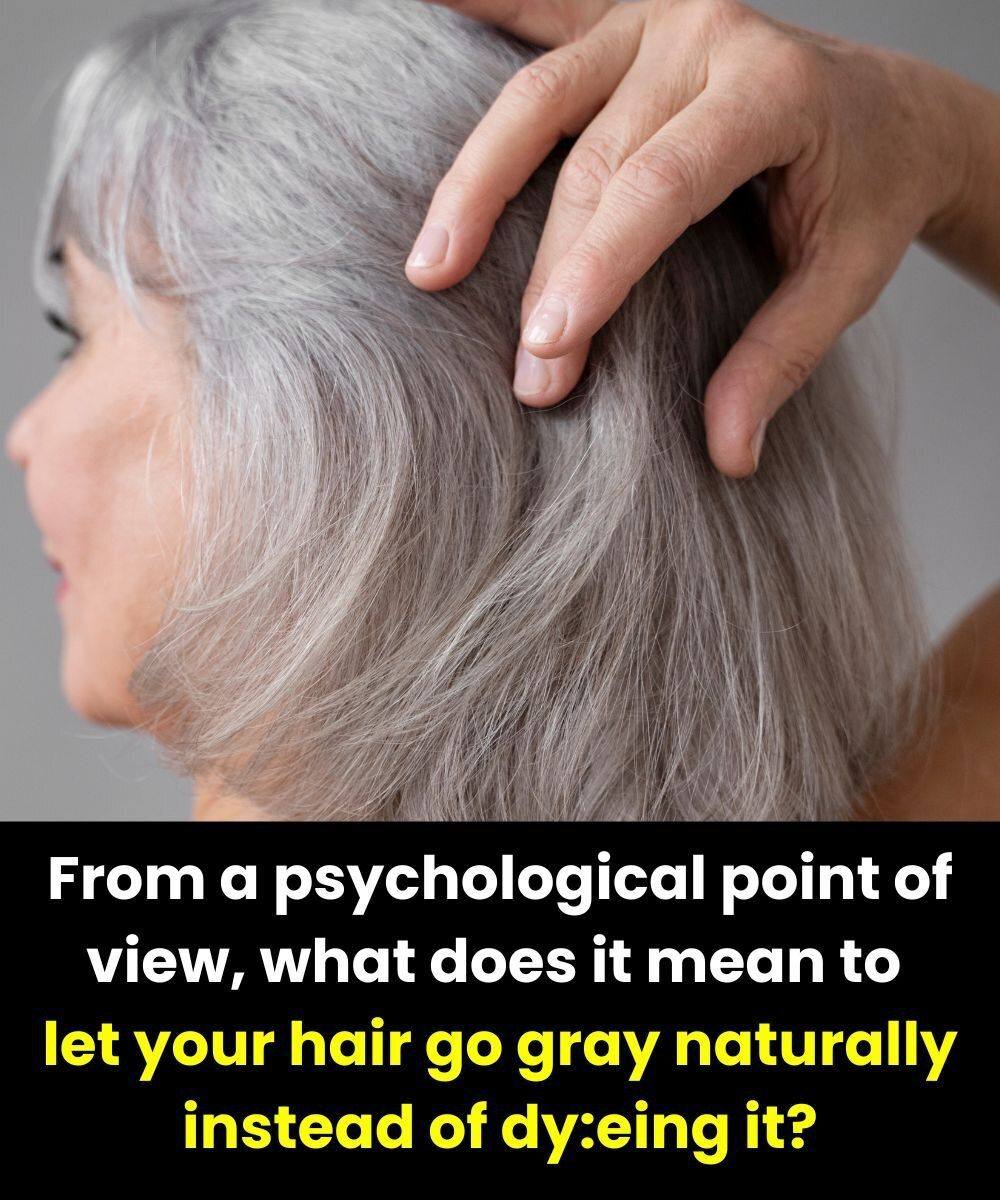
For many people, letting their hair turn gray is not a statement or a rebellion. It is a quiet decision made in front of the mirror, often without much thought at all. And yet, once those silver strands begin to show, something unexpected happens—not within the person who made the choice, but in the reactions of everyone else. Comments appear where there were none before. Advice is offered without being asked. Familiar interactions shift in subtle, hard-to-explain ways. What should be an ordinary sign of time passing suddenly feels charged with meaning.
1.
Why Letting Your Hair Turn Gray Naturally Can Make Others Uneasy
For many people, choosing to stop coloring their hair feels like a quiet, personal decision. There is no announcement, no demand for attention, and no intention to make a statement. It is simply a choice to let nature take its course. Yet for countless adults, especially women over 60, allowing gray hair to grow in naturally often brings unexpect
ed reactions from others. There may be awkward comments, unsolicited advice, or subtle shifts in how people respond. Some reactions are mild. Others feel surprisingly tense.
Why does something as simple as natural gray hair stir discomfort in people around us? The answer has very little to do with appearance alone. It reaches into deeper ideas about aging, identity, and the unspoken rules that shape how we see ourselves and one another.
A Culture That Believes Aging Should Be Managed
Modern American culture places enormous value on the idea of control. We are encouraged to manage our weight, smooth our skin, reshape our bodies, and maintain a youthful look for as long as possible. Hair dye, cosmetic treatments, and beauty routines are often framed as tools of empowerment. They promise that with enough effort, time itself can be negotiated.
When someone chooses to let their hair go gray naturally, they step away from this shared belief system. They are no longer participating in the idea that aging must be concealed or corrected. For many observers, this can feel quietly unsettling. Gray hair becomes a visible reminder that time moves forward whether we approve or
not.
The discomfort others feel is rarely about thinking gray hair looks bad. Instead, it comes from what gray hair represents. It challenges the comforting illusion that aging is fully within our control. Seeing someone accept their natural appearance can bring up unspoken fears about one’s own future and the limits of self-control.
Different Standards for Men and Women
Gray hair has never been judged equally across genders. On men, silver strands are often described as “distinguished” or “seasoned.” They can even enhance a man’s image of authority or wisdom. On women, however, gray hair has long been associated with ideas of decline, neglect, or giving up.
These double standards did not appear by accident. For decades, women have been expected to maintain a youthful appearance well into later life. Beauty has been tied closely to value, visibility, and even respect. Letting hair turn gray can be seen, unfairly, as stepping away from that expectation.Tap the p.hoto to v.iew the full r.ecipe.
2.
Continued on next page//
To see the full instructions for this recipe, go to the next page or click the open button (>) and don't forget to share it with your friends on Facebook.