

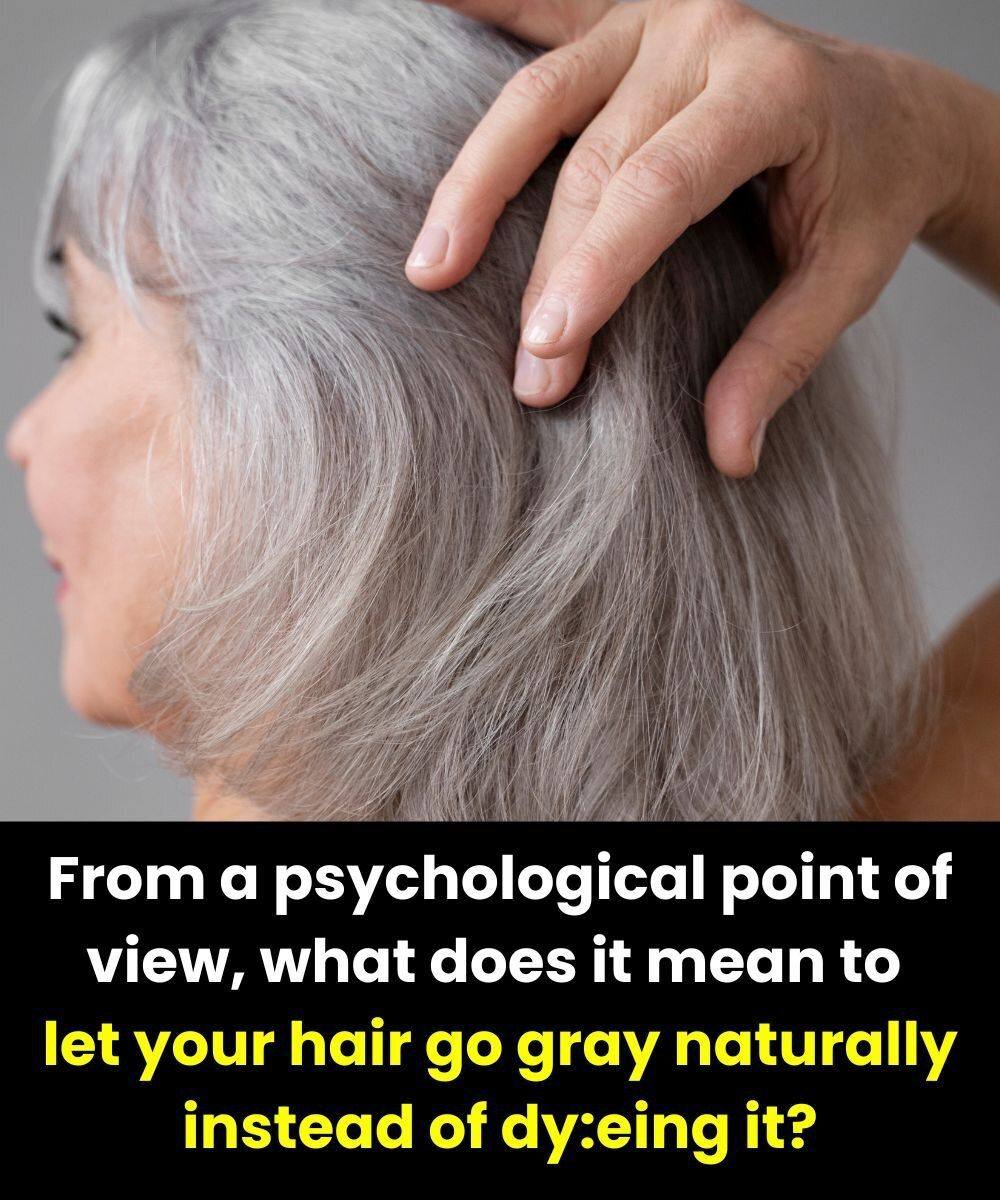
Because of this, some people react with discomfort not because they consciously judge gray hair, but because the choice disrupts a role they have learned to expect women to perform. When a woman no longer participates in the effort to appear younger, it challenges deeply ingrained assumptions about femininity, care, and self-worth.
The Unspoken Need for Approval
For many adults, appearance serves as a form of social language. It sends signals like “I care,” “I am keeping up,” or “I belong.” Hair color, clothing, and grooming choices often help people feel accepted and secure within their social circles.
When someone lets their hair go gray, it can look like a withdrawal from this system of validation. To observers, it may appear that the person is less concerned with trends or approval. This independence can be surprisingly unsettling to those who still rely on external affirmation to feel comfortable.
Psychologists often describe this reaction as projection. The discomfort does not truly belong to the gray-haired individual. Instead, it reflects the observer’s own questions and insecurities. Seeing someone who appears at ease without constant approval can quietly provoke thoughts like, “Why am I still trying so hard?” or “What would it mean if I stopped worrying too?”
Gray Hair Does Not Apologize
In many communities, aging is expected to be softened and politely hidden. We praise people for “not looking their age” and treat visible signs of time as something to correct. Natural gray hair does none of this. It is honest and visible. It does not ask for permission.
Because of this, people with gray hair are often expected to explain themselves. They may hear comments like, “Are you going to color it again?” or “You look tired.” These remarks are rarely meant to be cruel. They are often attempts to make sense of a choice that does not follow familiar rules.
When no explanation is offered, the silence itself can feel uncomfortable to others. It reads as confidence. It reads as final. Gray hair, in this sense, refuses to apologize for aging. That refusal can feel confronting to people who are still trying to disguise or delay the passage of time.
A Healthier Relationship With Time
For many adults over 60, allowing hair to turn gray reflects a deeper shift in perspective. It can signal a move away from resisting each stage of life and toward integrating it. Rather than striving to appear younger, some people choose to be fully present as they are now.
This relationship with time emphasizes wholeness over youthfulness. It suggests that value does not disappear with age and that identity continues
to evolve. For those who have not reached this mindset, encountering someone who has can feel destabilizing.
The presence of natural gray hair introduces a different narrative. It quietly says that worth is not tied to looking a certain way and that life does not end when youth fades. For people who are still measuring themselves against younger versions of who they once were, this message can be difficult to absorb.
Why the Reaction Feels Personal, Even When It Is Not
Many people who let their hair go gray report feeling surprised by the reactions they receive. Friends may offer advice that was never requested. Strangers may stare longer than expected. Family members may express concern disguised as care.
It is important to remember that these reactions are rarely about the individual making the choice. They are about the meaning others attach to aging. Gray hair becomes a mirror, reflecting cultural anxieties about growing older, losing relevance, or facing change.Tap the p.hoto to v.iew the full r.ecipe.
3.
Continued on next page
To see the full instructions for this recipe, go to the next page or click the open button (>) and don't forget to share it with your friends on Facebook.