
Aging is something that many of us are afraid of and trying to fight. We deny our age as much as possible and are constantly worried about waking up one day, looking into the mirror, and wondering where all the time has gone. This isn’t surprising. Modern culture frequently equates youth with utility and aging with obsolescence. We are bombarded with advertisements for anti-aging creams, bio-hacking supplements, and retirement plans that focus almost exclusively on the thickness of one’s wallet rather than the depth of one’s soul. Thousands of years before the first retirement community was ever built, however, a Chinese philosopher named Kong Fuzi, known to the West as Confucius, was already contemplating the blueprint for a life well-lived from start to finish.
Confucius viewed life not as a race to a finish line, but as a continuous process of self-cultivation. To him, the “golden years” were not a period of fading away, but the harvest season of a lifetime’s labor. It is the time when the Junzi (the exemplary person) finally reaps the peace that comes from a life of integrity, discipline, and love. If we approach old age with fear, it is often because we have not built a foundation sturdy enough to support the weight of our years. By looking back at Confucian ethics, we can find a roadmap that transforms aging from a process of losing into a process of becoming.
Confucius viewed life not as a race to a finish line, but as a continuous process of self-cultivation. To him, the “golden years” were not a period of fading away, but the harvest season of a lifetime’s labor. It is the time when the “Junzi” (the exemplary person) finally reaps the peace that comes from a life of integrity, discipline, and love. If we approach old age with fear, it is often because we have not built a foundation sturdy enough to support the weight of our years. By looking back at Confucian ethics, we can find a roadmap that transforms aging from a process of “losing” into a process of “becoming.”
Confucius and the Art of Self-Cultivation
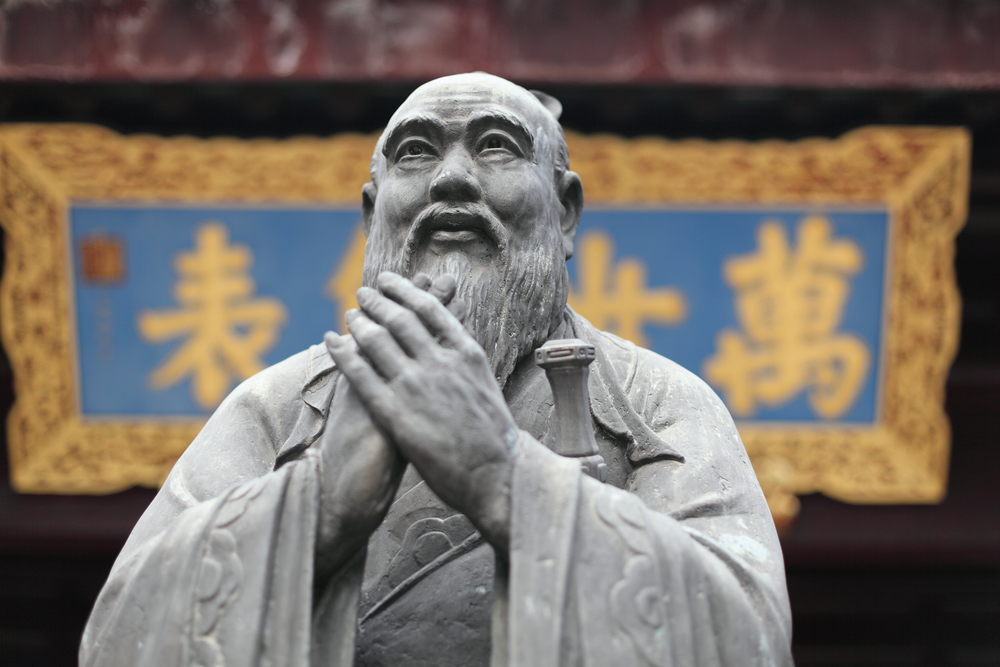
Before diving into specific principles, it is essential to understand the core of Confucian thought. Confucius lived during the Spring and Autumn period of Chinese history, a time of significant social upheaval and moral decay. His response was not to seek salvation in the supernatural, but to find it in the human. He believed that the secret to a stable society lay in the moral perfection of the individual. At the heart of his philosophy is the concept of Ren, humaneness or benevolence, and Li, ritual or propriety.
For Confucius, life is a series of interconnected relationships and duties. He famously outlined the progression of his own life in The Analects:
“At fifteen, I had my mind bent on learning. At thirty, I stood firm. At forty, I had no doubts. At fifty, I knew the decrees of Heaven. At sixty, my ear was an obedient organ for the reception of truth. At seventy, I could follow what my heart desired, without transgressing what was right.”
CONTINUE READING...>>
To see the full instructions for this recipe, go to the next page or click the open button (>) and don't forget to share it with your friends on Facebook.