
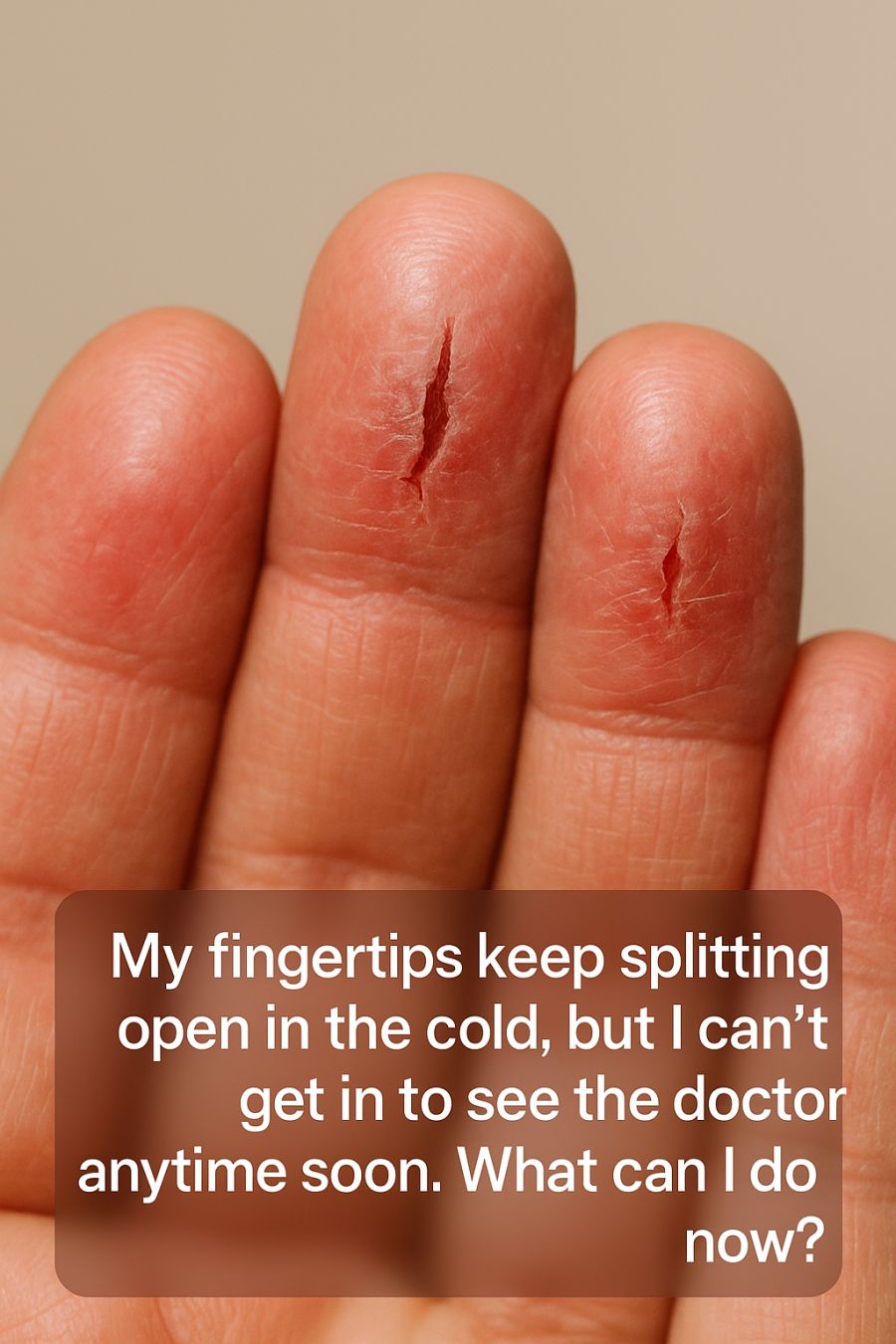
As winter approaches and temperatures plummet, many people experience the discomfort of skin issues exacerbated by the cold. One particularly painful and common problem is the splitting of fingertips. This occurs when the skin becomes dry and loses its elasticity, leading to painful cracks. Unfortunately, not everyone can access medical care immediately, leaving them to seek alternative solutions.
If you find yourself in this predicament, don’t worry—there are several effective home remedies and preventive measures you can take to manage this issue. In this article, we’ll explore why cold weather exacerbates this problem, how to treat and manage split fingertips, and when you should seek professional medical advice.
Advertisement
1. Why Cold Weather Makes Your Fingertips Split
Cold weather leads to low humidity levels, which in turn causes the skin to lose moisture. As the outermost layer of our skin, the epidermis, dries out, it can become brittle and more prone to cracking. This is especially true for the fingertips, which are constantly exposed to external elements.
The lack of moisture compromises the skin’s barrier function, reducing its ability to protect against environmental stressors. This issue is compounded by additional factors such as frequent handwashing and the use of alcohol-based sanitizers, both of which can strip the skin of its natural oils.
2. When Split Fingertips Are Annoying Versus Truly Serious
Split fingertips are often more of an annoyance than a serious medical condition. They can cause discomfort and make everyday tasks painful. However, if the cracks deepen, they can become entry points for bacteria, leading to infections.
If you notice signs of infection, such as increased redness, swelling, warmth, or pus, it’s important to seek medical attention. Additionally, if the splits do not improve with home treatment or you experience significant pain, it may be a sign of an underlying condition that requires professional evaluation.
3. The First Step: Gently Clean, Then Seal Each Crack
The first step in managing split fingertips is to gently clean the affected area with mild soap and water. Avoid harsh soaps that can further dry the skin. Pat the area dry, rather than rubbing, to prevent additional irritation.
Once clean, seal the cracks to protect them from further damage. You can use a thick ointment, such as petroleum jelly, to create a protective barrier. Apply it generously over the cracked skin to lock in moisture and facilitate healing.
4. The Superglue Hack: When (And How) It’s Actually Safe to Use
See continuation on next page
